A newspaper writer in Pittsburgh commented a few weeks ago that those who opposed Trump took him literally but not seriously while those who supported his candidacy took him seriously but not literally.
Today we see they were both wrong. Trump is as serious as a heart attack (I choose that metaphor purposefully) and that is precisely because of his plans... plans that will likely be unimpeded since he'll have a Republican congress and, at least theoretically, a partisan judiciary.
11 million people deported... imagine what that does to our economy. And then imagine what that does to the places to which they are sent.
The ACA repealed... Perhaps as many as 20 million people who had been uninsured, who got insurance under the ACA, now uninsured again. 45,000 annual deaths in the US due to lack of insurance before the ACA and we'll be back there again. I have a very good chance of being one of them... more in a later post.
Fundamental threats to the freedom of the press and to the civilized transfer of the political process ("lock her up," or worse, "execute her").
Trade agreements torn up.
Social safety net shredded and replaced with privatized schemes.
Bigotry being enshrined under the cloak of religious freedom
Any desire to address the biggest issue we face today - climate change - in a substantive way is simply discarded.
People of color and LGBTQ folk being completely disenfranchised.
No checks or balances.
Showing posts with label religious freedom. Show all posts
Showing posts with label religious freedom. Show all posts
Wednesday, November 09, 2016


Wednesday, November 18, 2015
Fear and Religious Freedom
You have likely heard freedom of the press referred to as the "first freedom," because it is central to the functioning of a democracy but also because many folk think it is the first freedom listed in the Bill of Rights. While it is part of the first amendment, it is not the first one listed. The first freedom listed is freedom of religion. One might argue that the order is irrelevant but I think it is not. Freedom of religion tells us that the government has no say in the way that we order our values and shape our lives. Freedom of speech and of the press is rendered impotent if the government first has the power to repress or support that most central of individual functions - the way we shape who we are, what we believe, what we value. As with all of the freedoms in the Bill of Rights, religious freedom is aimed primarily at protecting those who fall outside of the centers of power - odd groups, minority groups, those who do not
Like all freedoms, freedom of religion comes with risk. There are religious systems that by their nature are oppressive and destructive. There are religious systems that by their very nature work against human progress. There are even some that promote violence. As a nation we have wrestled with the ways to deal with those issues and have decided - rightly I believe - that before the government can interfere with religious practice, it must show a compelling interest. Fear is not a compelling interest.
Recently, because of the actions of a very small group of jihadists, Muslims have been the object of
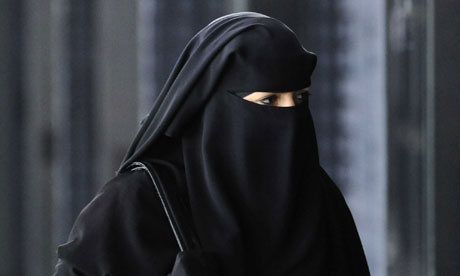 fear and of discrimination. One piece that comes up regularly is the wearing of burqas or niqabs which cover everything except the eyes (and sometimes even the eyes) by Muslim women. The arguments go two ways. One says that such treatment of women is oppressive (that is another post). The second is more prevalent now in these days following the terrorist attacks in Paris. It says that these loose fitting garments allow someone to hide weapons which are then easily used to commit violence and prevent others from being able to identify the person wearing the garments.
The fact that the vast majority of terrorists are men and that loose garments that cover the majority of the body are often worn by folk for very practical reasons (spend any time in northern Minnesota in January without everything being covered?) and that in many states in the US, citizens are allowed to openly carry weapons down the center of the street tells us that this is more about fear of the other than about terrorism.
It is worth understanding Muslim discussions and thoughts regarding hijab - modesty of dress for both men and women - in various Muslim cultures and theological traditions but that is basically irrelevant at this point. Many religious groups including orthodox Jews, the Amish, Sikhs, some groups of evangelical Christians, and some Muslim traditions have proscribed ways of dress for both women and men. The question is whether or not the government has the power to define religious expression in terms of dress. Perhaps a more blunt way to phrase the question is whether or not the government has the power to tell you or me what we must wear? If some Orthodox Jew finds it offensive that my wife's forearms are showing as she walks down the street or some Amish folk think my dress is too colorful should they be allowed to enforce their religious understandings? Should a Sunni from Saudi Arabia be able to make my female readers wear a niqab? We would be up on our hind legs in a second if any of those enforcements were to take place. We should feel the same repulsion at the idea that the government can make a woman who believes that her religious commitment to hijab requires her to be covered to uncover herself.
Like all freedoms, freedom of religion comes with risk. There are religious systems that by their nature are oppressive and destructive. There are religious systems that by their very nature work against human progress. There are even some that promote violence. As a nation we have wrestled with the ways to deal with those issues and have decided - rightly I believe - that before the government can interfere with religious practice, it must show a compelling interest. Fear is not a compelling interest.
Recently, because of the actions of a very small group of jihadists, Muslims have been the object of
The fact that the vast majority of terrorists are men and that loose garments that cover the majority of the body are often worn by folk for very practical reasons (spend any time in northern Minnesota in January without everything being covered?) and that in many states in the US, citizens are allowed to openly carry weapons down the center of the street tells us that this is more about fear of the other than about terrorism.
It is worth understanding Muslim discussions and thoughts regarding hijab - modesty of dress for both men and women - in various Muslim cultures and theological traditions but that is basically irrelevant at this point. Many religious groups including orthodox Jews, the Amish, Sikhs, some groups of evangelical Christians, and some Muslim traditions have proscribed ways of dress for both women and men. The question is whether or not the government has the power to define religious expression in terms of dress. Perhaps a more blunt way to phrase the question is whether or not the government has the power to tell you or me what we must wear? If some Orthodox Jew finds it offensive that my wife's forearms are showing as she walks down the street or some Amish folk think my dress is too colorful should they be allowed to enforce their religious understandings? Should a Sunni from Saudi Arabia be able to make my female readers wear a niqab? We would be up on our hind legs in a second if any of those enforcements were to take place. We should feel the same repulsion at the idea that the government can make a woman who believes that her religious commitment to hijab requires her to be covered to uncover herself.
Tuesday, September 01, 2015
Religious Refusals - Kim Davis
Again we see a county clerk, Kim Davis, who has made the news for refusing to grant marriage licenses to gay couples on the grounds that providing a license to them violates her religious commitments. Here's an article on the clerk.
After the SCOTUS decision, I wrote a blog post on the issue of religious liberty and this very issue, here. I've since thought more about the issue. As a country we do make accommodations for religious commitments whenever possible and we should continue to do so. The question is whether this is one of those instances.
I don't know whether there would have been an easy work around, whether the offended clerk could have easily had someone else issue the licenses, or if that was not possible. It is ironic that the clerk evidently has been divorced more than once and has no problem ignoring that, but that is a side issue. It is also clear that folk on both sides of the counter have decided to make this particular instance a test and that the SCOTUS has ordered her to issue the licenses. If there had been a reasonable work around (which I outlined in my previous post), the clerk has made it impossible to access.
So, here's my new thoughts on the issue. While we make religious accommodations, there are jobs for which no changes can be made to make it fit the religious objections of a given individual. For example, I am a pacifist for religious reasons. While the government did make accommodations for pacifists when there was a draft, there are clearly accommodations that could not be made. If I were to join the military as an infantryman and then refuse to carry a weapon because using one offended my religious commitments, nobody would argue that I be allowed to go into battle sans weapons, waiting for someone else to shoot their rifle. The job itself does not fit with my religious sensibilities. I could not and cannot do it. It seems that this is the case for this clerk. The clerk's job includes issuing marriage licenses and she is not empowered to decide whether a given couple meets the criteria to receive one. If her conscience will not allow her to issue marriage licenses to any who are legally entitled, she must resign or be fired. It is that simple.
After the SCOTUS decision, I wrote a blog post on the issue of religious liberty and this very issue, here. I've since thought more about the issue. As a country we do make accommodations for religious commitments whenever possible and we should continue to do so. The question is whether this is one of those instances.
I don't know whether there would have been an easy work around, whether the offended clerk could have easily had someone else issue the licenses, or if that was not possible. It is ironic that the clerk evidently has been divorced more than once and has no problem ignoring that, but that is a side issue. It is also clear that folk on both sides of the counter have decided to make this particular instance a test and that the SCOTUS has ordered her to issue the licenses. If there had been a reasonable work around (which I outlined in my previous post), the clerk has made it impossible to access.
So, here's my new thoughts on the issue. While we make religious accommodations, there are jobs for which no changes can be made to make it fit the religious objections of a given individual. For example, I am a pacifist for religious reasons. While the government did make accommodations for pacifists when there was a draft, there are clearly accommodations that could not be made. If I were to join the military as an infantryman and then refuse to carry a weapon because using one offended my religious commitments, nobody would argue that I be allowed to go into battle sans weapons, waiting for someone else to shoot their rifle. The job itself does not fit with my religious sensibilities. I could not and cannot do it. It seems that this is the case for this clerk. The clerk's job includes issuing marriage licenses and she is not empowered to decide whether a given couple meets the criteria to receive one. If her conscience will not allow her to issue marriage licenses to any who are legally entitled, she must resign or be fired. It is that simple.
Wednesday, July 02, 2014
Hobby Lobby
Hobby Lobby is all over the web these days getting everything from praise from folk who believe in the personhood of corporations to vilification by those who see a war on women coming from the right.
As I watch the complaints from the left, I think most are missing the point. Yes, I agree there is a war on women being waged by the far right and that the right wing of SCOTUS is clearly leading the charge. I do not see that as the primary question in the Hobby Lobby case. While the presenting issue is coverage of contraceptives (and yes, Hobby Lobby did cover most contraceptives and planned to continue doing so), that is not the real issue on the table. The real question is whether or not a corporation has the right to exercise freedom of religion. In its continuing expansion of the concept of personhood to corporations, SCOTUS has ruled that yes indeed, corporations, at least "closely held" ones, enjoy freedom of religion.
I can't say how ludicrous that sounds to me. Corporations do not make religious commitments. Period. As conservative Christians, I would expect the owners of Hobby Lobby to laugh at the idea of the company making "a personal commitment to Jesus Christ as Lord and Savoir and being baptized to show repentance from sin." Companies simply do not have religion. So how can they exercise freedom of religion? Yes, corporations are comprised of people, but under normal circumstances, a religious test is illegal when hiring so we can't assume any particular religious commitments among employees. It is also true that owners, especially in "closely held" corporations may have some consensus around religious belief, but the entire reason to form a corporation is to move the individuals a step away from the business and limit their liability. They are not completely identified with the corporation. Imagine if the owners of Hobby Lobby all died in a plane crash tomorrow. Would the company die as well? No, because it is not those owners and it does not even depend on their survival.
Here is the piece that really worries me. When you take a concept as central to our identity in the US as Freedom of Religion and apply it in such a stupid and inappropriate way, it damages the concept and will only give fuel to those who already think freedom of religion should be freedom from religion. This case will come back to bite those of us who take freedom of religion seriously and will hurt those for whom it really is an important issue.
As I watch the complaints from the left, I think most are missing the point. Yes, I agree there is a war on women being waged by the far right and that the right wing of SCOTUS is clearly leading the charge. I do not see that as the primary question in the Hobby Lobby case. While the presenting issue is coverage of contraceptives (and yes, Hobby Lobby did cover most contraceptives and planned to continue doing so), that is not the real issue on the table. The real question is whether or not a corporation has the right to exercise freedom of religion. In its continuing expansion of the concept of personhood to corporations, SCOTUS has ruled that yes indeed, corporations, at least "closely held" ones, enjoy freedom of religion.
I can't say how ludicrous that sounds to me. Corporations do not make religious commitments. Period. As conservative Christians, I would expect the owners of Hobby Lobby to laugh at the idea of the company making "a personal commitment to Jesus Christ as Lord and Savoir and being baptized to show repentance from sin." Companies simply do not have religion. So how can they exercise freedom of religion? Yes, corporations are comprised of people, but under normal circumstances, a religious test is illegal when hiring so we can't assume any particular religious commitments among employees. It is also true that owners, especially in "closely held" corporations may have some consensus around religious belief, but the entire reason to form a corporation is to move the individuals a step away from the business and limit their liability. They are not completely identified with the corporation. Imagine if the owners of Hobby Lobby all died in a plane crash tomorrow. Would the company die as well? No, because it is not those owners and it does not even depend on their survival.
Here is the piece that really worries me. When you take a concept as central to our identity in the US as Freedom of Religion and apply it in such a stupid and inappropriate way, it damages the concept and will only give fuel to those who already think freedom of religion should be freedom from religion. This case will come back to bite those of us who take freedom of religion seriously and will hurt those for whom it really is an important issue.
Wednesday, May 07, 2014
SCOTUS Got It Wrong (again)
It's no suprise that I'm not a fan of the current SCOTUS. Indeed, I think they've made one bad decision after another. As a Baptist, their latest one really irked me. The Baptist Joint Committee for Religious Liberty had filed a friend of the court brief opposing the town of Greece, NY's practice of beginning municipal meetings with prayer, almost exclusively with Christian content.
I have to admit that I'm more than a little surprised at the support the ruling has received from many right of center Christians. Justice Kennedy in his opinion repeatedly refers to the prayers as "ceremonial." As a person of faith, my prayers are never ceremonial. To make them such is to denigrate them and lessen their importance. On the other hand, to allow me to pray as I truly believe and to give that prayer the place I believe it deserves must by definition offend the conscience of some people. Also, as a Baptist who believes in Soul Liberty, I believe it is never the place of government to endorse any particular religious belief whether I believe it or not. All this ruling does is domesticate real faith and force it into the service of civil religion. For what it is worth, I do not believe that the meetings of Congress should begin with a prayer either.
Back in '07 a Hindu priest, Rajan Zed, offered a prayer in the Senate and this is what happened...
I have to say that I found Zed's prayer less offensive than the prayers shouted by the protestors but I do agree that he should not have been praying publicly. Of course, they should not either. And that leads to the second point. The government cannot stop them or me from praying silently any time or any place we choose including government buildings or meetings. Those prayers that I have spoken silently at city council meetings were real prayers about real issues and not merely ceremonial ones.
I have to admit that I'm more than a little surprised at the support the ruling has received from many right of center Christians. Justice Kennedy in his opinion repeatedly refers to the prayers as "ceremonial." As a person of faith, my prayers are never ceremonial. To make them such is to denigrate them and lessen their importance. On the other hand, to allow me to pray as I truly believe and to give that prayer the place I believe it deserves must by definition offend the conscience of some people. Also, as a Baptist who believes in Soul Liberty, I believe it is never the place of government to endorse any particular religious belief whether I believe it or not. All this ruling does is domesticate real faith and force it into the service of civil religion. For what it is worth, I do not believe that the meetings of Congress should begin with a prayer either.
Back in '07 a Hindu priest, Rajan Zed, offered a prayer in the Senate and this is what happened...
I have to say that I found Zed's prayer less offensive than the prayers shouted by the protestors but I do agree that he should not have been praying publicly. Of course, they should not either. And that leads to the second point. The government cannot stop them or me from praying silently any time or any place we choose including government buildings or meetings. Those prayers that I have spoken silently at city council meetings were real prayers about real issues and not merely ceremonial ones.
Wednesday, October 03, 2012
Pulpit Freedom Sunday
Religion and politics has become a hot button topic these days.
Roman Catholic Archbishop John Meyers has said that members of his church who are pro gay marriage should not receive the Eucharist.
For the past five years a group of conservative pastors have observed what they call Pulpit Freedom Sunday. Each year there is a lot of discussion about the propriety of the day and of churches making political endorsements. It is scheduled for this Sunday.
First let me come clean. I believe in absolute freedom of religion. The State has no right to dictate what a religious group can say or believe or constrain the way that faith lives itself out unless it is a danger to the general public. I also believe in freedom from religion as a necessary corollary to absolute freedom of religion. If individuals are not able to escape the influences of faith, they cannot freely choose. Public policy is therefore never to be based on religious doctrines. Freedom of religion is clearly an important issue in the two situations raised above.
A Roman Catholic archbishop can restrict who receives the Eucharist based on his understanding of Roman Catholic teaching. If he deems that advocating gay marriage is a sin, and that sin precludes one from the Lord's table, he can do that. The Roman Catholic church is not a democracy and it is irrelevant whether the majority of members agree or not or even if the teaching has no credible basis in scripture. He is the bishop and he speaks for the church (I know that is a slight over simplification). There is a set body of doctrine and practice, set by the church, which members are obligated to hold and observe. Now, if he is misinterpreting the church's teaching, that is for those above him in the hierarchy to say, not the members, not the US government, and certainly not those outside of the Roman Catholic Church. If an individual disagrees, he or she can leave that communion.
I also agree with the founders of Pulpit Freedom Sunday that the state has no right to control anything said from the pulpit. Part of the issue of freedom of religion is precisely that, that the government has no right to dictate what a religious group can or cannot say. Indeed, for many of the early framers of freedom of religion, a significant part of the equation was the ability of the Church to judge the State. How could they do that if they were not allowed to speak on political issues? If you look at the history of political speech in churches, it was not against IRS rules until the time of LBJ. Before then, pastors often spoke on political issues and no doubt, endorsed candidates at times.
Many folk misunderstand the way the tax code impacts separation of church and state. They often believe that religious organizations receive their tax exemption because they are like other charities that receive special tax status because they provide some community good. While I would argue that religious groups do a tremendous amount of good in our society, that is not why they receive tax exempt status. They receive tax exempt status solely because they are religious groups. The Supreme Court said in 1819 that the power to tax is the power to destroy, and the State has no grounds for any type of control over any religious group... therefore no taxation.
Some see the tax exempt status as a government subsidy to religion. The argument goes that because religious organizations do not pay taxes but do receive the benefits of government services, that equals a subsidy. The argument itself is not all that strong, but even if accurate, it does not matter. The Constitution precludes the establishment of religion and as was said above, the ability to tax is the ability to destroy... thereby interfering with religious freedom.
Now, I would not dare endorse a candidate from my pulpit (even though anyone who knows me could make a pretty accurate guess who I'll be voting for). I believe that God calls each of us to weigh the questions and make a decision. I believe there are some views that are clearly mo but that reflects my theology, not everyones'. Some religious groups have very well defined beliefs and extremely narrow options for disagreement. Freedom of religion requires that they be allowed to speak their religious beliefs from their pulpits.
Two other issues that have been raised a lot lately are not so clear - payment for contraception by medical insurance paid for by Roman Catholic institutions and the issue of abortion and public funds. The Catholic institutions in question are involved in matters not quite so clearly religious in nature such as hospitals, hire individuals who are not Roman Catholic, and serve in ways that are not quite clearly religious. I think the solution given by the Obama administration is an inelegant but workable solution.
As for abortions, public funds are not eligible to be used to pay for elective abortions anyway so the question is moot. It does raise a sticky point for me. What about taxes that are used to pay for things clearly in violation of a group's religious principles? If public funds were used to pay for elective abortions, should Roman Catholics or members of some evangelical groups be allowed to withhold a portion of their taxes because the funds are being used in ways that conflict with their faith? How about tax dollars that fund the military or capital punishment, both of which have been forbidden in Anabaptist doctrine for centuries? Should Anabaptists be allowed to withhold the percentage of their taxes that go to fund the military?
Roman Catholic Archbishop John Meyers has said that members of his church who are pro gay marriage should not receive the Eucharist.
For the past five years a group of conservative pastors have observed what they call Pulpit Freedom Sunday. Each year there is a lot of discussion about the propriety of the day and of churches making political endorsements. It is scheduled for this Sunday.
First let me come clean. I believe in absolute freedom of religion. The State has no right to dictate what a religious group can say or believe or constrain the way that faith lives itself out unless it is a danger to the general public. I also believe in freedom from religion as a necessary corollary to absolute freedom of religion. If individuals are not able to escape the influences of faith, they cannot freely choose. Public policy is therefore never to be based on religious doctrines. Freedom of religion is clearly an important issue in the two situations raised above.
A Roman Catholic archbishop can restrict who receives the Eucharist based on his understanding of Roman Catholic teaching. If he deems that advocating gay marriage is a sin, and that sin precludes one from the Lord's table, he can do that. The Roman Catholic church is not a democracy and it is irrelevant whether the majority of members agree or not or even if the teaching has no credible basis in scripture. He is the bishop and he speaks for the church (I know that is a slight over simplification). There is a set body of doctrine and practice, set by the church, which members are obligated to hold and observe. Now, if he is misinterpreting the church's teaching, that is for those above him in the hierarchy to say, not the members, not the US government, and certainly not those outside of the Roman Catholic Church. If an individual disagrees, he or she can leave that communion.
I also agree with the founders of Pulpit Freedom Sunday that the state has no right to control anything said from the pulpit. Part of the issue of freedom of religion is precisely that, that the government has no right to dictate what a religious group can or cannot say. Indeed, for many of the early framers of freedom of religion, a significant part of the equation was the ability of the Church to judge the State. How could they do that if they were not allowed to speak on political issues? If you look at the history of political speech in churches, it was not against IRS rules until the time of LBJ. Before then, pastors often spoke on political issues and no doubt, endorsed candidates at times.
Many folk misunderstand the way the tax code impacts separation of church and state. They often believe that religious organizations receive their tax exemption because they are like other charities that receive special tax status because they provide some community good. While I would argue that religious groups do a tremendous amount of good in our society, that is not why they receive tax exempt status. They receive tax exempt status solely because they are religious groups. The Supreme Court said in 1819 that the power to tax is the power to destroy, and the State has no grounds for any type of control over any religious group... therefore no taxation.
Some see the tax exempt status as a government subsidy to religion. The argument goes that because religious organizations do not pay taxes but do receive the benefits of government services, that equals a subsidy. The argument itself is not all that strong, but even if accurate, it does not matter. The Constitution precludes the establishment of religion and as was said above, the ability to tax is the ability to destroy... thereby interfering with religious freedom.
Now, I would not dare endorse a candidate from my pulpit (even though anyone who knows me could make a pretty accurate guess who I'll be voting for). I believe that God calls each of us to weigh the questions and make a decision. I believe there are some views that are clearly mo but that reflects my theology, not everyones'. Some religious groups have very well defined beliefs and extremely narrow options for disagreement. Freedom of religion requires that they be allowed to speak their religious beliefs from their pulpits.
Two other issues that have been raised a lot lately are not so clear - payment for contraception by medical insurance paid for by Roman Catholic institutions and the issue of abortion and public funds. The Catholic institutions in question are involved in matters not quite so clearly religious in nature such as hospitals, hire individuals who are not Roman Catholic, and serve in ways that are not quite clearly religious. I think the solution given by the Obama administration is an inelegant but workable solution.
As for abortions, public funds are not eligible to be used to pay for elective abortions anyway so the question is moot. It does raise a sticky point for me. What about taxes that are used to pay for things clearly in violation of a group's religious principles? If public funds were used to pay for elective abortions, should Roman Catholics or members of some evangelical groups be allowed to withhold a portion of their taxes because the funds are being used in ways that conflict with their faith? How about tax dollars that fund the military or capital punishment, both of which have been forbidden in Anabaptist doctrine for centuries? Should Anabaptists be allowed to withhold the percentage of their taxes that go to fund the military?
Tuesday, February 14, 2012
The Authority of Faith or If You're Going to be a Catholic, Be a Catholic
I believe in freedom of religion. I believe politicians can and should vote their consciences and that their consciences should be informed by their faith. I also don't believe that public policy should be formed around religious preferences. That basically means that when a politician puts forward a policy that is consonant with their faith, they better also have some good reasons that are outside of their faith. A foundation in one's faith is not enough to form public policy.
I respect politicians who truly hold their faith, whatever it may be, and live it with authenticity. I have no respect for politicians who use faith as a wedge between constituencies and I have little respect for politicians who are less than genuine in their commitments.
That brings me to Rick Santorum and Newt Gingrich, both of who have been playing the "good Roman Catholic" card of late. Neither is a good Roman Catholic. Both are ignoring the nature of authority in the Catholic church. They think and act as if a good Roman Catholic can pick and choose between the teachings of the church and embrace those that fit their own politics or morals while rejecting others. While in fact, many who call themselves Roman Catholics in the US do just that, it is a difficult place to be when the Catholic Church is built on a hierarchy of authority which cannot be easily ignored. Juan Cole has an interesting blog piece entitled the Top Ten Roman Catholic Teaching Rick Santorum Rejects While Obsessing about Birth Control where he shows how Santorum does just that. These two politicians claim to be pro-life and point to their supposed Roman Catholic faith as the foundation for that understanding, all the while ignoring that in Roman Catholic teaching, pro-life is a much broader term that rejects capital punishment, any kind of pre-emptive war, most specific wars including Iraq, and which calls for universal health care, welfare for all needy families...
The first time a politician stands up and says "I am against birth control because I'm a Roman Catholic... and I'm also against capital punishment. I take Just War Theory seriously and I believe in a safety net that truly provides for the needs and dignity of the poor," I will take that person seriously. Until then, he or she can't say that they hold a position based on the authority of their church without me laughing at them. I laugh at Santorum and Gingrich.
Now, there are other kinds of Christians who understand authority very differently. The Baptist tradition, for example, says that an individual's relationship to God is between them and God. Authority does not come from a hierarchy but from responsible reflection by the individual and interaction with the Holy. Without responsible reflection and without relationship to the Holy, there is no authority. Even when the relationship is authentic, in this tradition, one still cannot generalize the shape or substance of another's relationship with the Holy. (This is why freedom of religion was an idea that came primarily from the early Baptists). I know many in this tradition, my tradition, who see things very differently than I do. Some I respect deeply because their views are based in responsible reflection and in their understanding of their relationships with God. Others... not so much.
Still other traditions place the authority in the gathered community. The bottom line is that if one is going to claim religious authority for a particular stand, they had better understand how authority works in that tradition and own the tradition.
I respect politicians who truly hold their faith, whatever it may be, and live it with authenticity. I have no respect for politicians who use faith as a wedge between constituencies and I have little respect for politicians who are less than genuine in their commitments.
That brings me to Rick Santorum and Newt Gingrich, both of who have been playing the "good Roman Catholic" card of late. Neither is a good Roman Catholic. Both are ignoring the nature of authority in the Catholic church. They think and act as if a good Roman Catholic can pick and choose between the teachings of the church and embrace those that fit their own politics or morals while rejecting others. While in fact, many who call themselves Roman Catholics in the US do just that, it is a difficult place to be when the Catholic Church is built on a hierarchy of authority which cannot be easily ignored. Juan Cole has an interesting blog piece entitled the Top Ten Roman Catholic Teaching Rick Santorum Rejects While Obsessing about Birth Control where he shows how Santorum does just that. These two politicians claim to be pro-life and point to their supposed Roman Catholic faith as the foundation for that understanding, all the while ignoring that in Roman Catholic teaching, pro-life is a much broader term that rejects capital punishment, any kind of pre-emptive war, most specific wars including Iraq, and which calls for universal health care, welfare for all needy families...
The first time a politician stands up and says "I am against birth control because I'm a Roman Catholic... and I'm also against capital punishment. I take Just War Theory seriously and I believe in a safety net that truly provides for the needs and dignity of the poor," I will take that person seriously. Until then, he or she can't say that they hold a position based on the authority of their church without me laughing at them. I laugh at Santorum and Gingrich.
Now, there are other kinds of Christians who understand authority very differently. The Baptist tradition, for example, says that an individual's relationship to God is between them and God. Authority does not come from a hierarchy but from responsible reflection by the individual and interaction with the Holy. Without responsible reflection and without relationship to the Holy, there is no authority. Even when the relationship is authentic, in this tradition, one still cannot generalize the shape or substance of another's relationship with the Holy. (This is why freedom of religion was an idea that came primarily from the early Baptists). I know many in this tradition, my tradition, who see things very differently than I do. Some I respect deeply because their views are based in responsible reflection and in their understanding of their relationships with God. Others... not so much.
Still other traditions place the authority in the gathered community. The bottom line is that if one is going to claim religious authority for a particular stand, they had better understand how authority works in that tradition and own the tradition.
Saturday, February 04, 2012
A True American Story
The other day, a friend of mine shared a bit of his story. His father was a devout man who held his faith deeply. The nation where he lived made it very difficult to practice his faith as he believed God called him so, with pain and difficulty, leaving behind family, friends, job, and roots, moved to another country where he believed he would be able to faithfully practice his faith. He put down new roots and raised a family, trying to be faithful and to build a good life. Jump forward a generation and my friend, another faithful man, was trying to live out his understanding of his faith which didn't quite fit into the majority opinion of his homeland found himself in the US attending college. It was a new world with a broad mix of religions and opinions about faith. More important though, it was a place with an expressed commitment to freedom of religion. Each individual could practice his or her faith (or lack thereof) in a way that was most faithful to the deep commitments of their hearts. My friend and his new wife decided, this was the kind of place they could truly be faithful to their understanding of God's yearnings for them. It was the kind of place they wanted to raise their children. They stayed in the US and became citizens here, working, putting down roots, raising a family, and living out their faith in freedom.
Can you think of a story that more characterizes the American dream? Can you think of a story that is more consonant with the commitments that gave birth to this nation and continue to shape our culture as a people? I can't. This strikes me as the quintessential American story. It just happens that Mukhtar is Muslim. His father left India for Saudi Arabia to find a pace where he could live his Muslim faith without difficulty. Mukhtar left Saudi Arabia to find a place where he could live out his faith in a way that was authentic to his understanding of God's yearnings for him... he came to the land of freedom of religion so he could faithfully live as a Muslim, next door to Catholics, Jews, Hindus, Sikhs, Protestants, Mormons, Atheists, and a hundred other commitments, all learning from one another, struggling with one another, and even disagreeing with one another... in freedom.
Can you think of a story that more characterizes the American dream? Can you think of a story that is more consonant with the commitments that gave birth to this nation and continue to shape our culture as a people? I can't. This strikes me as the quintessential American story. It just happens that Mukhtar is Muslim. His father left India for Saudi Arabia to find a pace where he could live his Muslim faith without difficulty. Mukhtar left Saudi Arabia to find a place where he could live out his faith in a way that was authentic to his understanding of God's yearnings for him... he came to the land of freedom of religion so he could faithfully live as a Muslim, next door to Catholics, Jews, Hindus, Sikhs, Protestants, Mormons, Atheists, and a hundred other commitments, all learning from one another, struggling with one another, and even disagreeing with one another... in freedom.
Monday, July 04, 2011
a religious test for president
Last week, Politico had an article that missed the point of the constitution. It begins with the statistic that 1 in 5 voters would be less likely to vote for a candidate who is Mormon. They then ask, "Doesn’t the Constitution say, in Article VI, 'No religious test shall ever be required as a qualification to any office or public trust under the United States?'"
They miss the point. The article is referring to a legal test. Nobody can be excluded from running for president on the grounds of his or her religion or lack thereof. The article says nothing abut an individual's right to vote for whomever they want for any reason that is important to them. If I want to vote for someone just because they practice one religious tradition or against someone because they practice another, that is my right.
They also misunderstand religion. If an individual truly believes a given religion, we can expect that it will impact the way that individual would see and experience the world which must impact the way they govern. If I knew that someone running for president was a young earth, 6 day creationist Christian, I wouldn't need to know anything else to vote against them. That would tell me a great deal about the way they would approach education policies, scientific research, and likely even foreign policy. A religious system, if truly embraced, must impact the way a person sees and acts in the world. Therefore, it is fair game for an individual voter to consider. Likewise, it tells me something if an individual claims to hold a faith but also says it will not impact the decisions they make. Then I wonder what does inform that person's decision making.
Of course, in the United States the question of religion is always more complicated. Some years back, Martin Marty referred to the "baptistification of America" - the idea that each individual can construct his or her own faith system and that no outside authority can impose itself on the individual (or local congregation). That means that one can no longer assume that a Catholic agrees with what the hierarchy of the Roman Catholic Church says even though that system clearly expects individual believers to follow the teachings of the Church. In the US, just because an individual is a Mormon does not necessarily mean that they abide by the directives of the Mormon church. While this trend cannot be ignored, we still can expect that any given religious system will have an impact on the particular paradigms in which a person lives.
The bottom line though is that one can vote for a candidate for any reason the individual feels is important - the color of their hair, their educational background, where they grew up, or their religion.
They miss the point. The article is referring to a legal test. Nobody can be excluded from running for president on the grounds of his or her religion or lack thereof. The article says nothing abut an individual's right to vote for whomever they want for any reason that is important to them. If I want to vote for someone just because they practice one religious tradition or against someone because they practice another, that is my right.
They also misunderstand religion. If an individual truly believes a given religion, we can expect that it will impact the way that individual would see and experience the world which must impact the way they govern. If I knew that someone running for president was a young earth, 6 day creationist Christian, I wouldn't need to know anything else to vote against them. That would tell me a great deal about the way they would approach education policies, scientific research, and likely even foreign policy. A religious system, if truly embraced, must impact the way a person sees and acts in the world. Therefore, it is fair game for an individual voter to consider. Likewise, it tells me something if an individual claims to hold a faith but also says it will not impact the decisions they make. Then I wonder what does inform that person's decision making.
Of course, in the United States the question of religion is always more complicated. Some years back, Martin Marty referred to the "baptistification of America" - the idea that each individual can construct his or her own faith system and that no outside authority can impose itself on the individual (or local congregation). That means that one can no longer assume that a Catholic agrees with what the hierarchy of the Roman Catholic Church says even though that system clearly expects individual believers to follow the teachings of the Church. In the US, just because an individual is a Mormon does not necessarily mean that they abide by the directives of the Mormon church. While this trend cannot be ignored, we still can expect that any given religious system will have an impact on the particular paradigms in which a person lives.
The bottom line though is that one can vote for a candidate for any reason the individual feels is important - the color of their hair, their educational background, where they grew up, or their religion.
Thursday, March 10, 2011
Un-American
I'm a Baptist. One of the core commitments of all true Baptists is separation of church and state. Religion must be freely chosen and the government has no role in either curtailing or supporting religious practice. Essentially, religion must be invisible to government.
Today, Rep. King, a Republican from NY state is holding hearings to look into the "The Extent of Radicalization of Muslim Americans." While there is no doubt that there are radical Muslims in America and it might even be possible that the number is growing, to paint with such a broad brush is clearly a swipe against freedom of religion, a core principle upon which this nation was founded. When one faith group is singled out for attack, all are threatened.
Representative King, this is as un-american as it gets. You should be ashamed.
Today, Rep. King, a Republican from NY state is holding hearings to look into the "The Extent of Radicalization of Muslim Americans." While there is no doubt that there are radical Muslims in America and it might even be possible that the number is growing, to paint with such a broad brush is clearly a swipe against freedom of religion, a core principle upon which this nation was founded. When one faith group is singled out for attack, all are threatened.
Representative King, this is as un-american as it gets. You should be ashamed.
Tuesday, August 17, 2010
Ground Zero Mosque
I have not posted on this topic yet, largely because there are folk who have expressed my thoughts better than I could. At the foundation, I believe in freedom of religion. It is a core principle of our nation and one of the bedrocks of my tradition as a Baptist. The state has no right to interfere in religion at all... and that includes telling a faith community where it can or cannot worship. That said, there are so many other issues raised in the discussions surrounding the "ground zero mosque." The fact that approximately 10% of those killed on 9/11, including some first responders were Muslim... The fact that if "they hate us for our freedom," then the very best way to fight "them" is to exercise and live that freedom... The fact that the families of those who died at ground zero are anything but unanimous in their response to the proposed community center... And the fact that the proposed "ground zero mosque" is not at ground zero or even visible from the site.
A few days ago, Keith Olbermann commented on the controversy. It is well worth watching.
A few days ago, Keith Olbermann commented on the controversy. It is well worth watching.
Visit msnbc.com for breaking news, world news, and news about the economy
Subscribe to:
Posts (Atom)


