I'm not an economist and I don't play one on television. I never had an economics course in college. I am reasonably bright and thoughtful and I'm very good at looking at issues from every side, including the ones with which I don't agree. I'm also very good at realizing that things are rarely if ever simple and that complicated issues usually don't have simple solutions. All that said, there are multiple issues in the current economic discussions that strike me as stupid.
A couple of assumptions. I believe in taxes. They are part of the social contract. If you don't want to pay taxes you have two options... lower your income to the point that you drop below the threshold or move someplace like Somalia.
I believe in government. There are some things that the free market cannot or will not do that must be done. There are some things that non-profits and religious organizations cannot do that must be done. Civil society requires a strong and active central government.
Nobody does it all on their own. We all stand on the shoulders f someone who stood on the shoulders of someone who stood on the shoulders... and because of that we all have a responsibility to maintain the larger system for those who come after us.
So....
1. The argument goes that if we tax wealthy folk, they will not invest and if they do not invest, we will not have new jobs. Let's think about that one for a second. If someone makes an investment, they get a tax deduction for that investment. So, doesn't it follow that a higher tax rate encourages investment? After all, why give the money to the government when you can do something positive with it? On the other hand, if there is no tax incentive to invest, why take the risk? It makes sense to me that higher tax rates encourage rather than discourage investment. And that is before we look at the raw data. W dropped taxes on the wealthy to an historic low and we lost rather than increased jobs. The times when we had significantly more economic growth all had significantly higher tax rates on the wealthiest Americans. The higher rates then increase revenue in two ways. If the wealthy do not invest, they pay higher taxes. If they do invest, the tax rolls increase as jobs are created.
2. Debt reduction/government austerity seems to me to be a stupid plan when the economy is so weak. Take 20 million dollars out of the economy tomorrow and what happens? Everything falls a little lower. Low and middle class folk tend to be money in, money out folk. They spend their income because they have to and that feeds the economy. They purchase clothing or food and that creates or sustains jobs for other folk who then spend their income and it goes around and around. Cut unemployment or aid to poor families and the cycle stops. Let's look more long term. Cut student Pell Grants and other student aid and some students will not be able to go to college. 4 years later, we see a significant drop in capability of the work force and we all pay for that. Let the infrastructure continue to fall apart and moving goods costs more which raises prices which causes everything to slow down more and that spiral goes down. Laying off government workers adds to the unemployment roles and decreases economic productivity rather than increasing it.
3. Healthcare costs are central to the debt discussion. We have the highest costs in the world but by no means the best results. Many studies have suggested fixes but none will be easy and politics rather than economics or health are the problems. S+We need someone with cajones to look at long term real solutions.
4. The military. Nobody is going to suggest that we dismantle our military superiority... but we don't need to fund an empire. End the wars. Close the bases all around the world and bring those folk home. Then put them to work rebuilding America. Engage the companies that are building weaponry to build green technologies and come up with ways to reduce dependance on oil so we can defund the Middle East's terror machine. Finally build a national Peace Academy that studies how we promote peace, justice, & development. How many War Colleges do we have? Doesn't it make sense from a security standpoint to put some of our best minds to the study of what makes for peace? Take a percentage of the money we spent supporting an empire and use it for foreign aid. Build schools, especially for girls. Support infrastructure, education, and industry in the developing world.
5. Entitlements? As for Social Security? I'd raise the maximum income on which the tax applies so the tax is not so regressive.
Medicare? Remove the constraints that support big pharma and learn from places where Medicare costs are lower (Minnesota for example) and duplicate those ideas in places where costs are higher (Texas). The problems are systemic and shifting the costs to the elderly and the poor is not an acceptable or workable solution.
6. Get realistic in the discussions. Again and again we hear politicians saying that we should run the government like a family and every family has to have a balanced budget. First off, I don't know any families that do not borrow. We have mortgages. We have car loans. We have credit cards. Second, I don't know any family that defunds basic needs. If my wife is diagnosed with a serious illness... I'll borrow to get her treatment. Yes, I may/will forego some purchases and choices but I would not stop basic needs. I would not decide to stop eating because I have to pay medical costs. And if there were any way possible, I would not decide to stop medical treatments so I could pay to eat. I would borrow as much as I possibly could.
The entire discussion of a balanced budget amendment is just stupid. Imagine if there had been such an amendment during WWII. "Sorry, we can't invade Europe... there isn't any money."
So... my solution to the current mess... First, a government jobs program. Get unemployed folk out there working to rebuild our crumbling infrastructure. Reduce rather than increase costs for education so that we can actually compete on a global scale. Spend more rather than cut. Increase taxes on the wealthy and remove loopholes for corporations while at the same time increasing tax benefits for investments that either create jobs or rebuild infrastructure. Reduce military expenditures and put those funds in productive areas.
Friday, July 29, 2011


Thursday, July 28, 2011
look... a chin!
I shaved my beard and mustache last night. This morning when I shaved my entire chin, lip, and neck, I remembered why I hate shaving so much...
so why did I do it? I was tired of the beard and mustache and wanted a different look. Women can change their hair in radical ways and still fit in. They can change color. I've been married to a brunette, a red head, and a blond. They can change length. I've been married to a woman with waist length hair and every other length down to about 2 inches long. They can do radically different styles. I've been married to a woman with straight hair, curly hair, layered hair... you get the picture. All of that still fell in the mainstream and never got a second look other than the one that said, "what beautiful hair."
Men don't have as many options. Some men do color their hair, often to cover gray, but Just for Men still gets looks, especially in the business world. More radical colors just don't happen in men out of their mid twenties who work somewhere other than the entertainment business. There also isn't a lot of leeway in choice of styles especially when you are no longer, "young." I can go a little shorter or a little longer but not much in either direction before it is less "respectable." A well trimmed beard or mustache is allowable in most circles but they can't be too long, thick, or unruly without being pigeon-holed as a biker, an eccentric, or an outsider, each with its attendant expectations and stereotypes.
I've had the beard and mustache for about 6 years this time. I grew them because I was tired of shaving and wanted a change. I've been thinking about removing them for a few months. It wasn't that I wanted to change back... I just wanted something new. We'll see how long this lasts. And guess what... I do have a chin! Photos coming
so why did I do it? I was tired of the beard and mustache and wanted a different look. Women can change their hair in radical ways and still fit in. They can change color. I've been married to a brunette, a red head, and a blond. They can change length. I've been married to a woman with waist length hair and every other length down to about 2 inches long. They can do radically different styles. I've been married to a woman with straight hair, curly hair, layered hair... you get the picture. All of that still fell in the mainstream and never got a second look other than the one that said, "what beautiful hair."
Men don't have as many options. Some men do color their hair, often to cover gray, but Just for Men still gets looks, especially in the business world. More radical colors just don't happen in men out of their mid twenties who work somewhere other than the entertainment business. There also isn't a lot of leeway in choice of styles especially when you are no longer, "young." I can go a little shorter or a little longer but not much in either direction before it is less "respectable." A well trimmed beard or mustache is allowable in most circles but they can't be too long, thick, or unruly without being pigeon-holed as a biker, an eccentric, or an outsider, each with its attendant expectations and stereotypes.
I've had the beard and mustache for about 6 years this time. I grew them because I was tired of shaving and wanted a change. I've been thinking about removing them for a few months. It wasn't that I wanted to change back... I just wanted something new. We'll see how long this lasts. And guess what... I do have a chin! Photos coming
Wednesday, July 20, 2011
Multiple Religions
I mentioned Rachel Held Evan's blog the other day... yesterday she posted an interview with a friend of hers who is an Orthodox Jew. It is a fascinating read... Often the questions were formulated like "What do Jews think about..." and answered, "Jews think..." or "the majority of Jews think..." I commented that the answers may have been representative of Orthodox Jews but readers needed to be aware that answers from Conservative and Reformed Jews, let alone secular Jews, might be radically different. The woman who was interviewed responded, "The vast majority of Orthodox Judaism consider Reform and Conservative to be a different religion."
My first reaction was WHOA!!! and all of the hairs n the back of my neck went up. How many times I've been written off as not really being a Christian because I don't agree that TULIP is an adequate or accurate condensation of the Christian faith or disagree with what someone else feels is required in a statement of faith. Then I thought about the answer... clearly it is accurate. The way that many Reformed Jews and Conservative Jews understand their faith is so radically different from what this woman described that they may easily be seen as separate religions. That got me thinking about an experience I had a few years ago and think I shared here but couldn't find so here it is again.
I was flying someplace by myself and ended up seated next to a young woman. It was the time when the Episcopal Church was fighting about Gene Robinson, an openly gay man, to the position of Bishop. Whatever I was reading led her to ask me what I thought of ordaining an openly gay, non-celibate man as a Bishop. I told her I thought his orientation was irrelevant to the question and we had an interesting discussion. It turned out she was an Orthodox Presbyterian. To put the highlights in a nutshell, she told me that her brother is gay, God created her brother that way, and that God would condemn him to hell for being gay. The potter can create a pot for whatever use the potter chooses... Obviously, I was aghast at her theological construct. We talked for a bit and she observed, "we worship two very different Gods." She was correct. She might have also observed that we practice two different religions... even though both are called or, at least, call themselves "Christianity."
I've raised the question of definitions before. I still don't have any good answers but the questions still remain. Who is the real Jew, Christian, Baptist, Muslim, American, whatever? Who gets to define the term? And, perhaps, most important of all, when terms are used with such radically different definitions, how do we ensure that we are understood or understand?
My first reaction was WHOA!!! and all of the hairs n the back of my neck went up. How many times I've been written off as not really being a Christian because I don't agree that TULIP is an adequate or accurate condensation of the Christian faith or disagree with what someone else feels is required in a statement of faith. Then I thought about the answer... clearly it is accurate. The way that many Reformed Jews and Conservative Jews understand their faith is so radically different from what this woman described that they may easily be seen as separate religions. That got me thinking about an experience I had a few years ago and think I shared here but couldn't find so here it is again.
I was flying someplace by myself and ended up seated next to a young woman. It was the time when the Episcopal Church was fighting about Gene Robinson, an openly gay man, to the position of Bishop. Whatever I was reading led her to ask me what I thought of ordaining an openly gay, non-celibate man as a Bishop. I told her I thought his orientation was irrelevant to the question and we had an interesting discussion. It turned out she was an Orthodox Presbyterian. To put the highlights in a nutshell, she told me that her brother is gay, God created her brother that way, and that God would condemn him to hell for being gay. The potter can create a pot for whatever use the potter chooses... Obviously, I was aghast at her theological construct. We talked for a bit and she observed, "we worship two very different Gods." She was correct. She might have also observed that we practice two different religions... even though both are called or, at least, call themselves "Christianity."
I've raised the question of definitions before. I still don't have any good answers but the questions still remain. Who is the real Jew, Christian, Baptist, Muslim, American, whatever? Who gets to define the term? And, perhaps, most important of all, when terms are used with such radically different definitions, how do we ensure that we are understood or understand?
Monday, July 18, 2011
a radical benediction
I came across this Fourfold Franciscan Blessing today at Experimental Theology and love it...
here it is
thanks for sharing it Richard.
here it is
May God bless you with a restless discomfort about easy answers, half-truths and superficial relationships, so that you may seek truth boldly and love deep within your heart.
May God bless you with holy anger at injustice, oppression, and exploitation of people, so that you may tirelessly work for justice, freedom, and peace among all people.
May God bless you with the gift of tears to shed with those who suffer from pain, rejection, starvation, or the loss of all that they cherish, so that you may reach out your hand to comfort them and transform their pain into joy.
May God bless you with enough foolishness to believe that you really can make a difference in this world, so that you are able, with God's grace, to do what others claim cannot be done.
thanks for sharing it Richard.
Wednesday, July 13, 2011
Truth
I regularly read Rachel Held Evans blog and follow her on twitter. The other day she called a prominent pastor on the carpet for behavior that was anything but Christlike. I think she was right on target with her criticism but that isn't what really caught my attention. In her critique, she cited a couple of sources outside of the conservative Christian media. She was criticized for citing unbelievers and the message was that anything said by an unbeliever was by definition untrue and unworthy of consideration, especially if it was criticizing someone in the Church. It is a fairly typical argument in parts of the evangelical community.
Truth is truth is truth is truth, regardless of where it comes from. 2 + 2 doesn't cease to equal 4 because a serial killer tells us it is so. And 2 + 2 doesn't equal 5 just because a prominent preacher from a large and influential church tells us it does. I couldn't help but think of the story in Numbers 22:22-35 of Balaam and his donkey. Truth comes from unexpected places. The donkey saves Balaam's life and sees the "truth" of the situation. Now, I am not implying that the secular sources cited in the blogpost are equivalent to Balaam's donkey. Not in any way whatsoever. I am saying that if we ignore the truth that comes to us from a wide variety of sources, we do so at our own risk. In the case of the blogpost, to ignore the truth in the sources cited is just... stupid.
Truth is truth is truth is truth, regardless of where it comes from. 2 + 2 doesn't cease to equal 4 because a serial killer tells us it is so. And 2 + 2 doesn't equal 5 just because a prominent preacher from a large and influential church tells us it does. I couldn't help but think of the story in Numbers 22:22-35 of Balaam and his donkey. Truth comes from unexpected places. The donkey saves Balaam's life and sees the "truth" of the situation. Now, I am not implying that the secular sources cited in the blogpost are equivalent to Balaam's donkey. Not in any way whatsoever. I am saying that if we ignore the truth that comes to us from a wide variety of sources, we do so at our own risk. In the case of the blogpost, to ignore the truth in the sources cited is just... stupid.
Monday, July 04, 2011
a religious test for president
Last week, Politico had an article that missed the point of the constitution. It begins with the statistic that 1 in 5 voters would be less likely to vote for a candidate who is Mormon. They then ask, "Doesn’t the Constitution say, in Article VI, 'No religious test shall ever be required as a qualification to any office or public trust under the United States?'"
They miss the point. The article is referring to a legal test. Nobody can be excluded from running for president on the grounds of his or her religion or lack thereof. The article says nothing abut an individual's right to vote for whomever they want for any reason that is important to them. If I want to vote for someone just because they practice one religious tradition or against someone because they practice another, that is my right.
They also misunderstand religion. If an individual truly believes a given religion, we can expect that it will impact the way that individual would see and experience the world which must impact the way they govern. If I knew that someone running for president was a young earth, 6 day creationist Christian, I wouldn't need to know anything else to vote against them. That would tell me a great deal about the way they would approach education policies, scientific research, and likely even foreign policy. A religious system, if truly embraced, must impact the way a person sees and acts in the world. Therefore, it is fair game for an individual voter to consider. Likewise, it tells me something if an individual claims to hold a faith but also says it will not impact the decisions they make. Then I wonder what does inform that person's decision making.
Of course, in the United States the question of religion is always more complicated. Some years back, Martin Marty referred to the "baptistification of America" - the idea that each individual can construct his or her own faith system and that no outside authority can impose itself on the individual (or local congregation). That means that one can no longer assume that a Catholic agrees with what the hierarchy of the Roman Catholic Church says even though that system clearly expects individual believers to follow the teachings of the Church. In the US, just because an individual is a Mormon does not necessarily mean that they abide by the directives of the Mormon church. While this trend cannot be ignored, we still can expect that any given religious system will have an impact on the particular paradigms in which a person lives.
The bottom line though is that one can vote for a candidate for any reason the individual feels is important - the color of their hair, their educational background, where they grew up, or their religion.
They miss the point. The article is referring to a legal test. Nobody can be excluded from running for president on the grounds of his or her religion or lack thereof. The article says nothing abut an individual's right to vote for whomever they want for any reason that is important to them. If I want to vote for someone just because they practice one religious tradition or against someone because they practice another, that is my right.
They also misunderstand religion. If an individual truly believes a given religion, we can expect that it will impact the way that individual would see and experience the world which must impact the way they govern. If I knew that someone running for president was a young earth, 6 day creationist Christian, I wouldn't need to know anything else to vote against them. That would tell me a great deal about the way they would approach education policies, scientific research, and likely even foreign policy. A religious system, if truly embraced, must impact the way a person sees and acts in the world. Therefore, it is fair game for an individual voter to consider. Likewise, it tells me something if an individual claims to hold a faith but also says it will not impact the decisions they make. Then I wonder what does inform that person's decision making.
Of course, in the United States the question of religion is always more complicated. Some years back, Martin Marty referred to the "baptistification of America" - the idea that each individual can construct his or her own faith system and that no outside authority can impose itself on the individual (or local congregation). That means that one can no longer assume that a Catholic agrees with what the hierarchy of the Roman Catholic Church says even though that system clearly expects individual believers to follow the teachings of the Church. In the US, just because an individual is a Mormon does not necessarily mean that they abide by the directives of the Mormon church. While this trend cannot be ignored, we still can expect that any given religious system will have an impact on the particular paradigms in which a person lives.
The bottom line though is that one can vote for a candidate for any reason the individual feels is important - the color of their hair, their educational background, where they grew up, or their religion.
Friday, July 01, 2011
what makes good music?
I've been thinking about this question for a few weeks. I read something while surfing a few weeks ago that cited a study done where brain activity was charted while people listened to music. They had a piece of classical music that was played perfectly, no mistakes or flubs of any kind. My guess is that it was played by some midi program. The brain activity was fairly flat. Then the same piece of music was played by a human being. There were no huge mistakes but it was anything but perfect. It included some notes that were a little early or late, maybe some pitch wasn't perfect. It also included emotion. The brain scans showed a lot more activity. Basically, the brains of the listeners were much more engaged with the imperfect renditions of the piece of music.
OK, I don't have the link and I'm not even 100% sure that the study was real or if real, reported accurately. Still, it rings true to me... I find human music much more engaging and players who play like midi computers don't impress me.
The second piece of the question goes back to our days in Albany when the Eighth Step ran a weekly open mic. It was a wonderful community. There were seasoned and touring pros who would show up and play new material they were readying for the road and there were rank beginners just learning. Sometimes the music was sublime. Other times, it was clearly the work of beginners. Everyone was affirmed and appreciated and encouraged to move further along their journey. There was none of the stereotypical, "I could do that better" that sometimes happens among musicians. There was no sense of competition. Instead, it was a wonderful and supportive community and the music was reflective of that. Alexis and I had similar feelings when we played at Songwriters at Play about a month ago.
So, where am I going with this? Music, "real" music, for me, is all about community and relationships. It need not be perfect. Indeed, when it is perfect, that probably indicates that something is not quite right about it (when have you ever experienced perfection in any of your relationships?). If you want perfect, hire a DJ or pop on a CD. If you want music, enjoy the warts, clams, and flubs and find the beautiful and sublime in the joy of creative relationships that reflect the souls of those making the music.
OK, I don't have the link and I'm not even 100% sure that the study was real or if real, reported accurately. Still, it rings true to me... I find human music much more engaging and players who play like midi computers don't impress me.
The second piece of the question goes back to our days in Albany when the Eighth Step ran a weekly open mic. It was a wonderful community. There were seasoned and touring pros who would show up and play new material they were readying for the road and there were rank beginners just learning. Sometimes the music was sublime. Other times, it was clearly the work of beginners. Everyone was affirmed and appreciated and encouraged to move further along their journey. There was none of the stereotypical, "I could do that better" that sometimes happens among musicians. There was no sense of competition. Instead, it was a wonderful and supportive community and the music was reflective of that. Alexis and I had similar feelings when we played at Songwriters at Play about a month ago.
So, where am I going with this? Music, "real" music, for me, is all about community and relationships. It need not be perfect. Indeed, when it is perfect, that probably indicates that something is not quite right about it (when have you ever experienced perfection in any of your relationships?). If you want perfect, hire a DJ or pop on a CD. If you want music, enjoy the warts, clams, and flubs and find the beautiful and sublime in the joy of creative relationships that reflect the souls of those making the music.
Wednesday, June 29, 2011
gigs?

So... I'm no longer playing with Jamie Green... (if you want to hear more about that, contact me personally as I don't want to put any of that u[p on the web). Once again, I'm being pushed a bit to be more intentional regarding my music. That is a good thing, except it does require a bit of discipline and investment of time. In the meantime, I'm looking for opportunities to play with/for others. Wish me luck and keep your eyes and ears open for more of my music which hopefully will be coming soon (ish).
Thursday, June 23, 2011
Gettysburg
We visited the Gettysburg battlefield today... it has been a long long time since I was there and most of the details had receded into some dark corner of my brain.
It was a painful day... My daughter, Alexis, remarked that places have memories. The memories of this very beautiful place were horrific. Some 163,000 soldiers met over the three day battle. Total casualties, killed, wounded, or captured, were 23,000 for the Union and 28,000 for the Confederates. My wife's great grandfather was wounded at Pickett's Charge and later died from the wound. So much death. So many families torn apart. So much pain. I found myself wondering why we have not learned.
We saved the last part of our visit for the Eternal Light Peace Memorial. As I drove up to the memorial I found myself dreaming that someday we might learn the lesson of that horrible battle. We parked just behind a car with multiple bumper stickers. The first said, "Everything I need to know about Islam, I learned on 9/11." The second was a "terrorist hunting license." The third was a painting of the framers of the constitutions with the label, "Right Wing Extremists." There was a fourth I didn't really look it. And of course an NRA sticker.
I didn't talk with the driver. I didn't see the driver. I have no idea what kind of person he (I assume the driver is a "he") is. I do have to wonder how a person can frame the world in terms of those bumper stickers. More importantly I couldn't help but think of him in terms of the numbers of people who fought and died at Gettysburg. And to read those words in front of a memorial to peace...
It was a painful day... My daughter, Alexis, remarked that places have memories. The memories of this very beautiful place were horrific. Some 163,000 soldiers met over the three day battle. Total casualties, killed, wounded, or captured, were 23,000 for the Union and 28,000 for the Confederates. My wife's great grandfather was wounded at Pickett's Charge and later died from the wound. So much death. So many families torn apart. So much pain. I found myself wondering why we have not learned.
We saved the last part of our visit for the Eternal Light Peace Memorial. As I drove up to the memorial I found myself dreaming that someday we might learn the lesson of that horrible battle. We parked just behind a car with multiple bumper stickers. The first said, "Everything I need to know about Islam, I learned on 9/11." The second was a "terrorist hunting license." The third was a painting of the framers of the constitutions with the label, "Right Wing Extremists." There was a fourth I didn't really look it. And of course an NRA sticker.
I didn't talk with the driver. I didn't see the driver. I have no idea what kind of person he (I assume the driver is a "he") is. I do have to wonder how a person can frame the world in terms of those bumper stickers. More importantly I couldn't help but think of him in terms of the numbers of people who fought and died at Gettysburg. And to read those words in front of a memorial to peace...
Monday, June 13, 2011
Mac 1
Back in April I posted a piece about switching from a windows pc to a mac. The key piece pushing the move was that I wanted a laptop with firewire for recording. I couldn't find any windows laptops with firewire and I looked hard. And my laptop was getting more and more unstable and problematic. Well, I did it. I bought a 13.5" Macbook Pro with an I5 chip and 4M of ram. It arrived last Friday and I've begun moving data etc. to the Mac. Here are my first impressions...
1. The Mac is no easier or more intuitive than windows. Indeed, there are lots of things that I could do on the pc much easier and quicker. Now, there are surely some things that I haven't figured out on the Mac... but they are not obvious or simple.
2. The slight differences in the keyboard are frustrating. I really miss the end, page down, etc. keys. The different uses of the control vs. command keys are just a matter of learning and becoming accustomed to the differences.
3. The hardware of the Mac is stellar. The computer is elegant, fast, and seems just really, really, really well designed and outfitted. Of course, for the price, it should be. Did I say fast? I mean really fast.
4. Software remains to be decided... I have been using Open Office on the PC for a while but haven't been completely happy with it. Just out of principle, I have been trying to move away from Microsoft for a while. So... I purchased Iworks... that may have been a mistake. Office may have been a smarter choice to make the transition to the new platform easier. I do need to be aware that we use windows at work.
I HATE Itunes. I don't like the interface. I don't like what it seems to have done with all of my files. Did it actually make additional copies of every music file? It sure looks that way. Safari is eh. I used Firefox on the PC and may try the Mac version.
5. Everything seems more difficult to tweak.
6. It is nice to not have the virus worry... although I have to say that I'm not entirely sure that I trust that.
7. I have a windows smart phone that I still have to figure out how to get it to talk with the mac.
So... what would I say to someone thinking about the switch? Only if there is something that you need to do that you cannot do on your current platform. There are differences but I don't think they are nearly as significant as the Mac true believers would tell you. It is more like learning a different language than moving to a new universe.
1. The Mac is no easier or more intuitive than windows. Indeed, there are lots of things that I could do on the pc much easier and quicker. Now, there are surely some things that I haven't figured out on the Mac... but they are not obvious or simple.
2. The slight differences in the keyboard are frustrating. I really miss the end, page down, etc. keys. The different uses of the control vs. command keys are just a matter of learning and becoming accustomed to the differences.
3. The hardware of the Mac is stellar. The computer is elegant, fast, and seems just really, really, really well designed and outfitted. Of course, for the price, it should be. Did I say fast? I mean really fast.
4. Software remains to be decided... I have been using Open Office on the PC for a while but haven't been completely happy with it. Just out of principle, I have been trying to move away from Microsoft for a while. So... I purchased Iworks... that may have been a mistake. Office may have been a smarter choice to make the transition to the new platform easier. I do need to be aware that we use windows at work.
I HATE Itunes. I don't like the interface. I don't like what it seems to have done with all of my files. Did it actually make additional copies of every music file? It sure looks that way. Safari is eh. I used Firefox on the PC and may try the Mac version.
5. Everything seems more difficult to tweak.
6. It is nice to not have the virus worry... although I have to say that I'm not entirely sure that I trust that.
7. I have a windows smart phone that I still have to figure out how to get it to talk with the mac.
So... what would I say to someone thinking about the switch? Only if there is something that you need to do that you cannot do on your current platform. There are differences but I don't think they are nearly as significant as the Mac true believers would tell you. It is more like learning a different language than moving to a new universe.
Thursday, June 02, 2011
frustration
why does blogger keep randomly inserting http://www.blogger.com/img/blank.gif in my blogs? I found 3 in my previous blog... after I posted it
ARRRRGGGGHHHH!
ARRRRGGGGHHHH!
family stuff - Alexis d
Tuesday evening, Alexis and I played a short set at Songwriters at Play in SLO and had a wonderful time. It was so much fun to dust off some material we haven't played in a long time, to relearn some tunings (we did one song in DGDGCD), and just to share that experience with my daughter. We have two more gigs coming up that I'm also looking forward to - we open for John Batdorf at the Cambridge Drive Concert Series tomorrow (June 3), and then on Sat, June 4 are participating in a fund raiser for Robert Postel.
Also, this week, I finally got an old VHS tape of Alexis and I playing on a local television show in Albany, NY from about '99 transferred to a digital format. I'm hoping to put a few of the performances up on youtube... I'll let you all know when that happens.
I love playing with Jamie Green and I love playing with the church band and sitting in with other folk but I have to say there is something really special about performing with my daughter... If you're in the Santa Barbara area, come by and check us out.
Also, this week, I finally got an old VHS tape of Alexis and I playing on a local television show in Albany, NY from about '99 transferred to a digital format. I'm hoping to put a few of the performances up on youtube... I'll let you all know when that happens.
I love playing with Jamie Green and I love playing with the church band and sitting in with other folk but I have to say there is something really special about performing with my daughter... If you're in the Santa Barbara area, come by and check us out.
Sunday, May 29, 2011
let's play
I love this video...
We have a wonderful nursery school at Cambridge Drive Community Church called the Goleta Valley Nursery School where the core of the philosophy is that children learn through play. Every aspect of the curriculum is based on that premise and it is a wonderful, child centered place to be.
I believe they are absolutely on target. But... but... play as a way of being in the world, of finding joy, of experiencing the gifts of God is something we should never abandon. I think that is, in part, what Jesus was talking about when he said that in order to fully enter the kingdom of God we must become like children (Mark 10:15)- experiencing joy and wonder in each moment.
Watch the video again... wouldn't it be wonderful to approach life with the same joy and playfulness as the child (and the otter for that matter)?
We have a wonderful nursery school at Cambridge Drive Community Church called the Goleta Valley Nursery School where the core of the philosophy is that children learn through play. Every aspect of the curriculum is based on that premise and it is a wonderful, child centered place to be.
I believe they are absolutely on target. But... but... play as a way of being in the world, of finding joy, of experiencing the gifts of God is something we should never abandon. I think that is, in part, what Jesus was talking about when he said that in order to fully enter the kingdom of God we must become like children (Mark 10:15)- experiencing joy and wonder in each moment.
Watch the video again... wouldn't it be wonderful to approach life with the same joy and playfulness as the child (and the otter for that matter)?
Wednesday, May 25, 2011
The Bible Guarantees It
We've all seen the advertisements that were running before May 21st with the tag live - "The Bible Guarantees It." And then, nothing unusual happened on May 21st. What are people to conclude? The Bible is not reliable. Of course, many conservative Christians have responded by saying that the Bible does guarantee many things... just not that, and they have a long list of things they would say the Bible does guarantee.
I'd agree that the Bible does guarantee a few things: God loves us. God's yearnings for us are more wonderful than we can imagine. Grace truly is amazing... but beyond that, not much. Some time back I quoted The Shadow Rock UCC Church in Phoenix who say "We know that to understand the Bible means taking it seriously but not literally." I'd go a little farther, I think, and say, "Taking the Bible seriously means not taking it literally," and I take the Bible seriously. It is a central book in my faith. There are lessons there that can be found nowhere else. I believe that God chooses to speak through that book in a unique way and it truly is inspired. I believe the Bible... but, I do not believe that it provides predictions regarding the future. I do not believe that it provides simple answers to complex questions. I do not believe that proof texts can easily be applied to the issues we face today. I do not believe it is a science book nor do I believe that it is a history book in the sense we understand history books to work today. Taking the Bible seriously requires that I understand these things before I open the pages and read stories, letters, poems, and songs that serve to shape my faith and help to give direction to my life.
So how do I respond to the folk who are distraught because the Bible seems no longer to be trustworthy? I tell them that they don't understand what it is or how it works.
I'd agree that the Bible does guarantee a few things: God loves us. God's yearnings for us are more wonderful than we can imagine. Grace truly is amazing... but beyond that, not much. Some time back I quoted The Shadow Rock UCC Church in Phoenix who say "We know that to understand the Bible means taking it seriously but not literally." I'd go a little farther, I think, and say, "Taking the Bible seriously means not taking it literally," and I take the Bible seriously. It is a central book in my faith. There are lessons there that can be found nowhere else. I believe that God chooses to speak through that book in a unique way and it truly is inspired. I believe the Bible... but, I do not believe that it provides predictions regarding the future. I do not believe that it provides simple answers to complex questions. I do not believe that proof texts can easily be applied to the issues we face today. I do not believe it is a science book nor do I believe that it is a history book in the sense we understand history books to work today. Taking the Bible seriously requires that I understand these things before I open the pages and read stories, letters, poems, and songs that serve to shape my faith and help to give direction to my life.
So how do I respond to the folk who are distraught because the Bible seems no longer to be trustworthy? I tell them that they don't understand what it is or how it works.
Wednesday, May 18, 2011
May 22
I'm sure by now you've heard the news from the e bible fellowship .com and family radio...
I don't believe it. Indeed, I don't believe in the second coming in that form at all. I have to admit that I'm tempted to make fun of those folk. I've received an invitation to an after-rapture party. I've chuckled at the new business offering pet care to the left behind and well-loved pets of believers caught up in the rapture at a serious pre-paid price. I've scratched my head at folk who feel the need to quantify the end of the world... And then I heard some interviews on NPR with true believers. Now I'm just sad.
There are a bunch of folk who believe this interpretation to the point that they've left jobs, sold off property, given up anything to be ready for the rapture on May 21, 2011. I'm sad because of what I believe they will face on May 22, 2011. Will their faith be completely destroyed? How will they put their lives back together? What about relationships they sacrificed to this belief? Can they be redeemed?
I'm sad about the other fundamentalist groups who are drawing lines in the sand and calling the true believers of this interpretation heretics. I'm sad about the more liberal Christians who just write these folk off as crazies without seeing the depth of their faith and the depth of their need for... something.
And I'm sad for those who look at this and paint all people of faith with the same brush... one that spells "CRAZY" and write off any possibility of a faith that speaks to their real lives.
So... I won't be partying on May 22... I'll be sad.
I don't believe it. Indeed, I don't believe in the second coming in that form at all. I have to admit that I'm tempted to make fun of those folk. I've received an invitation to an after-rapture party. I've chuckled at the new business offering pet care to the left behind and well-loved pets of believers caught up in the rapture at a serious pre-paid price. I've scratched my head at folk who feel the need to quantify the end of the world... And then I heard some interviews on NPR with true believers. Now I'm just sad.
There are a bunch of folk who believe this interpretation to the point that they've left jobs, sold off property, given up anything to be ready for the rapture on May 21, 2011. I'm sad because of what I believe they will face on May 22, 2011. Will their faith be completely destroyed? How will they put their lives back together? What about relationships they sacrificed to this belief? Can they be redeemed?
I'm sad about the other fundamentalist groups who are drawing lines in the sand and calling the true believers of this interpretation heretics. I'm sad about the more liberal Christians who just write these folk off as crazies without seeing the depth of their faith and the depth of their need for... something.
And I'm sad for those who look at this and paint all people of faith with the same brush... one that spells "CRAZY" and write off any possibility of a faith that speaks to their real lives.
So... I won't be partying on May 22... I'll be sad.
Monday, May 16, 2011
a sideman's blues

I love to play as a sideman. I have played guitar or bass with some wonderful performers. Currently, I play regularly with Jamie Green and really enjohttp://www.blogger.com/img/blank.gify playing with her and Bob Terry on cajon (Bob is an amazing drummer). I get to make wonderful music without being 100% responsible for what is happening. I put the date on my calendar, learn the music, show up, and hopefully play well.
Here's the problem... a good side man is transparent. They play exactly what is on the recording, nothing more, nothing less. Bob works in artist relations for Yamaha drums and tells lots of stories of great players not getting a gig because they cannot reproduce the exact sounds on a recording without purchasing some new something or other. And it isn't even the same rhythms we're talking about, it is the exact sound. I'm not particularly interested in being transparent.
When you move from a recording with a full band to a trio with one acoustic guitar and a cajon or a duo with one acoustic guitar, it just doesn't work to play exactly what the guitar player on the recording played. The context is too different and you end up with a live performance that is pretty anemic. Sometimes that is fine for the songwriter and sometimes it isn't as they sometimes fill in the missing parts in their head and hear something the audience doesn't hear. And two different sidemen might hear what is needed in very different ways.
Then there is the other piece of the puzzle... I'm not particularly interested in playing what was done on the recording even when it does work. I have my own aesthetic and the joke is true... "how many guitar players does it take to change a lightbulb?" "However many you have... only one to actually change the lightbulb while the rest talk about how they would have done it better." An example here is a great song of Jamie's called, "Like to Be with You." The part on the recording would work fine live and I could easily play it exactly that way... but I like the way I play it much better, using multiple capos and a bit of a Celtic feel.
Luckily, Jamie lets me play like myself for the most part although therehttp://www.blogger.com/img/blank.gif are times when she'll ask me to play something differently. They are her songs and it is her name on the calendar so I do my best to accommodate her desires. I think that most of the time she is happy with what I do but I do get the feeling sometimes that she is dreaming of a sideman who worked with her in LA and who is transparent.
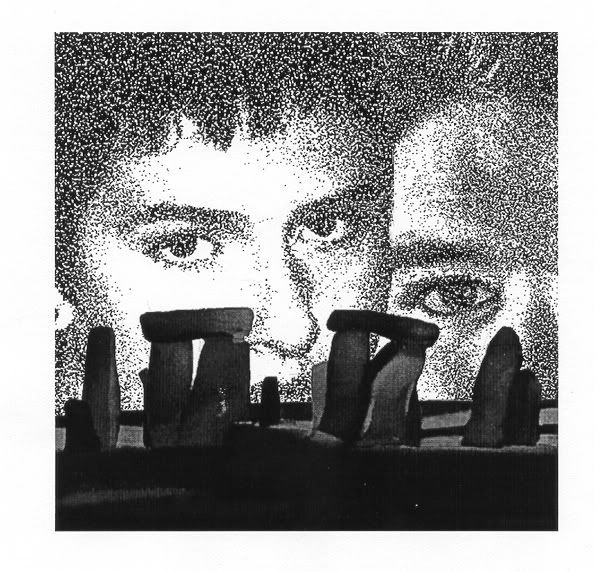
Back in the late 90's and early 00's, I played with my daughter, Alexis. It was a fun project. We wrote some very satisfying music, performed around the northeast and as far away as Des Moines, Iowa. When we started, I was doing a solo thing and had Alexis sit in with me a few times. She had a blast and it eventually became a duo. We performed as "D" and did a record that in part was a senior project for a music production major at the College of St. Rose who had heard us phttp://www.blogger.com/img/blank.giferform. Alexis has a distinctive voice and a wonderful stage presence and we quickly learned that people weren't really interested in me so we switched the name to "Alexis d." Even though we were performing under her name, it still was a partnership in terms of the music. So, I didn't have to worry about being transparent as I was the one who wrote the guitar parts from the beginning.
It has been about 5 years since we've performed together but Alexis is staying with us for two months while her husband is doing an educational program in New Jersey and we have a few gigs lined up including opening for John Batdorf at the Cambridge Drive Concert Series in June. She isn't quite as thrilled as I am since the lyrical content of some of the songs reflects a very different place in life for her... still, I'm excited that I get to play ME a few times.
You can hear some of the Alexis d material on the player in the right hand column.
Thursday, May 05, 2011
National Day of Prayer
Today is designated the National Day of Prayer - an event that has been held since 1952. As violations of the separation of church and state go, it is pretty minor, but the symbolism is important and it is a bad idea. I am against it both on constitutional grounds and on religious grounds. Here's why...
To whom are we praying? Even among Christians, one could argue that the God we pray to is not all the same. The folk at Westboro Baptist are a clear example of this when they say that the God they worship does not love everyone... my God does. Clearly we are not worshiping the same God. I once had a discussion with an orthodox Presbyterian who told me that God had created her brother gay so that God could send him to suffer eternally in hell. That woman and I do not worship the same God. She actually came to that conclusion before me and raised it to me. And that doesn't begin to add all of the variety of religious understandings in our country. So, to whom are we praying? Should we sacrifice a chicken? Bow towards Mecca? Sit in silence? Chant a Sanskrit chant? Recite the Lord's Prayer (which version)? Pray in the name of Jesus? Burn incense? Pray in Hebrew or Coptic or Greek?
And what when the deepest prayers of our hearts conflict? I pray for the end not only of specific wars but of war in general and of the military complex... and I believe it should begin with the immediate dismantling of the American Empire. How do I find common ground with those who would pray for the literal destruction of America's "enemies?" What of those who pray for the assassination of the current president vs. those who pray for his re-election? We can't even ask forgiveness together when different groups would see America as guilty of very different sins.
Some would say to go ahead and pray specifically. They would say to go ahead and pray in the name of Jesus while likely feeling much less comfortable with a prayer to Allah or some god whose name they had never even heard before. In any case, this would marginalize many people some of whom might even feel that praying to whatever other god in whatever other way constitutes sin.
Some would answer that we should pray generic prayers that can apply to any religion... but if we do that, why bother? If the prayers are so generic, so non-specific as to not offend anyone, they have no real meaning.
Another answer is that individuals can each pray privately as they see fit... but people who pray already do that, so again, why bother?
The early Baptists knew that when the state imposes religion, above all else, it damages religion. At the very best, imposed religion weakens faith both by causing it to move to the lowest common denominator and by identifying it with the "earthly institution" of the state. At the worst, it is used as a means of rendering the actions of the state as being above judgment as they are identified with whatever god is being implored.
Finally, the state cannot grant me the right to pray as I see fit nor can it stop me from praying as I see fit. Those actions are simply beyond the power of any state. Some nations have tried to curtail faith and many more nations have persecuted people of a wide variety of religious understandings... but those who believe cannot be stopped from believing as they choose and they cannot be compelled to believe that which they do not.
None of what has been said applies to the population of Americans who do not pray at all, who have no faith in any god. Are we asking them to act against their consciences? their deeply held convictions? Or worse yet, are we reminding them that they are not really "us" and trying to dissociate them from the mainstream of our culture? Again, we are marginalizing folk.
I'm against a national day of prayer. It does nothing to deepen faith. It does nothing to bring our nation to a better place. It does serve to harm real faith and to cause divisions between people. And it clearly is unconstitutional.
That said, I have prayed today. I would have prayed anyway. Indeed, I had forgotten that today is the National Day of Prayer. There is nothing any state can do to make me pray nor to make me stop, short of killing me. So, pray if it is something that is part of your life. It is a good thing to give thanks for the positives of the USA, to ask forgiveness for our cultural shortcomings, and to pray that the negatives will change. And do it again tomorrow and every day. And work to make things better. If you don't pray, then, do something positive today that makes the world a little better. And do it tomorrow as well.
To whom are we praying? Even among Christians, one could argue that the God we pray to is not all the same. The folk at Westboro Baptist are a clear example of this when they say that the God they worship does not love everyone... my God does. Clearly we are not worshiping the same God. I once had a discussion with an orthodox Presbyterian who told me that God had created her brother gay so that God could send him to suffer eternally in hell. That woman and I do not worship the same God. She actually came to that conclusion before me and raised it to me. And that doesn't begin to add all of the variety of religious understandings in our country. So, to whom are we praying? Should we sacrifice a chicken? Bow towards Mecca? Sit in silence? Chant a Sanskrit chant? Recite the Lord's Prayer (which version)? Pray in the name of Jesus? Burn incense? Pray in Hebrew or Coptic or Greek?
And what when the deepest prayers of our hearts conflict? I pray for the end not only of specific wars but of war in general and of the military complex... and I believe it should begin with the immediate dismantling of the American Empire. How do I find common ground with those who would pray for the literal destruction of America's "enemies?" What of those who pray for the assassination of the current president vs. those who pray for his re-election? We can't even ask forgiveness together when different groups would see America as guilty of very different sins.
Some would say to go ahead and pray specifically. They would say to go ahead and pray in the name of Jesus while likely feeling much less comfortable with a prayer to Allah or some god whose name they had never even heard before. In any case, this would marginalize many people some of whom might even feel that praying to whatever other god in whatever other way constitutes sin.
Some would answer that we should pray generic prayers that can apply to any religion... but if we do that, why bother? If the prayers are so generic, so non-specific as to not offend anyone, they have no real meaning.
Another answer is that individuals can each pray privately as they see fit... but people who pray already do that, so again, why bother?
The early Baptists knew that when the state imposes religion, above all else, it damages religion. At the very best, imposed religion weakens faith both by causing it to move to the lowest common denominator and by identifying it with the "earthly institution" of the state. At the worst, it is used as a means of rendering the actions of the state as being above judgment as they are identified with whatever god is being implored.
Finally, the state cannot grant me the right to pray as I see fit nor can it stop me from praying as I see fit. Those actions are simply beyond the power of any state. Some nations have tried to curtail faith and many more nations have persecuted people of a wide variety of religious understandings... but those who believe cannot be stopped from believing as they choose and they cannot be compelled to believe that which they do not.
None of what has been said applies to the population of Americans who do not pray at all, who have no faith in any god. Are we asking them to act against their consciences? their deeply held convictions? Or worse yet, are we reminding them that they are not really "us" and trying to dissociate them from the mainstream of our culture? Again, we are marginalizing folk.
I'm against a national day of prayer. It does nothing to deepen faith. It does nothing to bring our nation to a better place. It does serve to harm real faith and to cause divisions between people. And it clearly is unconstitutional.
That said, I have prayed today. I would have prayed anyway. Indeed, I had forgotten that today is the National Day of Prayer. There is nothing any state can do to make me pray nor to make me stop, short of killing me. So, pray if it is something that is part of your life. It is a good thing to give thanks for the positives of the USA, to ask forgiveness for our cultural shortcomings, and to pray that the negatives will change. And do it again tomorrow and every day. And work to make things better. If you don't pray, then, do something positive today that makes the world a little better. And do it tomorrow as well.
Wednesday, May 04, 2011
Baptists... again...
On March 24 I out up a post titled Will the Real ____ where I asked who gets to define a term or tradition. I touched on my tradition - the Baptists - and I want to revisit that part of the discussion.
One of my Facebook friends recently made a number of comments about Christians in general and Baptists in particular in a thread about compassion that I want to address without further hijacking that thread. In a first comment he mentioned Westboro Baptist as an example of Baptist "compassion." When I complained about that, he told a story of some very negative experiences with Southern Baptist churches and wondered why Southern Baptists don't speak out about Westboro.
I am not a Southern Baptist. Never have been. Wouldn't be. Couldn't be. Can't speak for them. As I hinted in the earlier thread, I'm not sure they deserve to be called Baptist at all... but that too is another discussion.
So... let me address my friend's statements from my perspective.
I belong to the American Baptist denomination. Pre civil war days, there was basically one large, loosely connected, Baptist group in the US which split over slavery into the Southern Baptist Convention and the group that became the American Baptist Churches, USA. Since that time there have been multiple split offs and new configurations of Baptists. A few years ago I was told that there were 49 Baptist bodies in the United States alone and there are thousands more "independent Baptist" churches that do not formally relate to any larger groupings. Theologically, most are conservative but not all. Some groups, like the Alliance of Baptists, fall solidly in the progressive/liberal camp. Most of the Black Baptist groups are a mix of liberal on issues of economics and race and conservative on sexuality and theology. Many groups are wildly diverse. My denomination, ABCUSA, has no racial group comprising over 50% of the denomination, includes churches that would proudly call themselves fundamentalist and others that are dually aligned with the Unitarian Universalist Association, has had ordained women leaders since the 1800's and many congregations that do not allow women leaders of any kind... you get the picture. Worldwide, there are 218 groups that are members of the Baptist World Alliance.
Some prominent names in Baptist history illustrate that diversity - Martin Luther King Jr., Jimmy Carter, Bill Clinton, Walter Rauschenbusch, Fred Phelps, Albert Mohler Jr, Jerry Falwell, and Roger Williams.
Early Baptist commitments were summarized by Walter Shurden in his book The Baptist Identity: Four Fragile Freedoms where he identifies four core commitments that define the Baptist movement - soul freedom, church autonomy, freedom of the scripture to speak for itself, and separation of church and state.
All of that is to show that the Southern Baptist Convention is by no means representative of the entire tradition, and indeed, I would argue that they have strayed so far from the main stream of the tradition that they are no longer Baptists at all.
As to the second question - why don't Baptists speak out against Westboro Baptist and its actions? They do. The last time Westboro was making national news the General Secretary of the ABCUSA had a press conference and sent news releases everywhere condemning Westboro's actions and telling everyone that Westboro is not related to ABCUSA. I don't know whether other Baptist groups did the same but I would expect they did. The actions of a denomination condemning Westboro Baptist doesn't have nearly the sex appeal of their despicable actions and so didn't make the news anywhere. It happened, you just didn't hear about it. Blame the media for that, not the Baptists. As far as I know, Westboro Baptist Church is an independent church and is not affiliated with any larger Baptist body and I'm sure they couldn't care less what the ABCUSA has to say to them. Indeed, they likely see the ABCUSA condemnation as a mark of honor.
One of my Facebook friends recently made a number of comments about Christians in general and Baptists in particular in a thread about compassion that I want to address without further hijacking that thread. In a first comment he mentioned Westboro Baptist as an example of Baptist "compassion." When I complained about that, he told a story of some very negative experiences with Southern Baptist churches and wondered why Southern Baptists don't speak out about Westboro.
I am not a Southern Baptist. Never have been. Wouldn't be. Couldn't be. Can't speak for them. As I hinted in the earlier thread, I'm not sure they deserve to be called Baptist at all... but that too is another discussion.
So... let me address my friend's statements from my perspective.
I belong to the American Baptist denomination. Pre civil war days, there was basically one large, loosely connected, Baptist group in the US which split over slavery into the Southern Baptist Convention and the group that became the American Baptist Churches, USA. Since that time there have been multiple split offs and new configurations of Baptists. A few years ago I was told that there were 49 Baptist bodies in the United States alone and there are thousands more "independent Baptist" churches that do not formally relate to any larger groupings. Theologically, most are conservative but not all. Some groups, like the Alliance of Baptists, fall solidly in the progressive/liberal camp. Most of the Black Baptist groups are a mix of liberal on issues of economics and race and conservative on sexuality and theology. Many groups are wildly diverse. My denomination, ABCUSA, has no racial group comprising over 50% of the denomination, includes churches that would proudly call themselves fundamentalist and others that are dually aligned with the Unitarian Universalist Association, has had ordained women leaders since the 1800's and many congregations that do not allow women leaders of any kind... you get the picture. Worldwide, there are 218 groups that are members of the Baptist World Alliance.
Some prominent names in Baptist history illustrate that diversity - Martin Luther King Jr., Jimmy Carter, Bill Clinton, Walter Rauschenbusch, Fred Phelps, Albert Mohler Jr, Jerry Falwell, and Roger Williams.
Early Baptist commitments were summarized by Walter Shurden in his book The Baptist Identity: Four Fragile Freedoms where he identifies four core commitments that define the Baptist movement - soul freedom, church autonomy, freedom of the scripture to speak for itself, and separation of church and state.
All of that is to show that the Southern Baptist Convention is by no means representative of the entire tradition, and indeed, I would argue that they have strayed so far from the main stream of the tradition that they are no longer Baptists at all.
As to the second question - why don't Baptists speak out against Westboro Baptist and its actions? They do. The last time Westboro was making national news the General Secretary of the ABCUSA had a press conference and sent news releases everywhere condemning Westboro's actions and telling everyone that Westboro is not related to ABCUSA. I don't know whether other Baptist groups did the same but I would expect they did. The actions of a denomination condemning Westboro Baptist doesn't have nearly the sex appeal of their despicable actions and so didn't make the news anywhere. It happened, you just didn't hear about it. Blame the media for that, not the Baptists. As far as I know, Westboro Baptist Church is an independent church and is not affiliated with any larger Baptist body and I'm sure they couldn't care less what the ABCUSA has to say to them. Indeed, they likely see the ABCUSA condemnation as a mark of honor.
Monday, May 02, 2011
a parable
I'm struggling with the killing of Osama bin Laden. As most of you know a very important part of my spiritual formation took place among the Anabaptists and I am a pacifist by faith. I also truly believe pacifism works. The immediate response to someone who espouses non-violence is usually something like "they're trying to kill us," or "who will protect the innocent?" as if taking up arms means that nobody on your side dies and the innocent are spared! Violence begets violence. Non-violence opens new possibilities.
This little parable comes back to me often when I think of such times as today...
It was rainy season and a holy man was sitting under a tree in prayer. Nearby a scorpion was cut off on a small mound of dirt, surrounded by the rising waters. As the holy man watched he realized that the scorpion would drown if he didn't act to save it. So, he got up and reached towards the scorpion, which tried to sting him. This happened a number of times while the water continued to rise.
A man who was watching spoke to the holy man, "You're going to get stung if you keep trying to save that scorpion. Don't you know that it is in the nature of the scorpion to sting?"
The holy man smiled and responded, "Don't you know that it is my nature to preserve life? Why should I allow the evil nature of the scorpion to cause me to abandon my good nature?"
This little parable comes back to me often when I think of such times as today...
It was rainy season and a holy man was sitting under a tree in prayer. Nearby a scorpion was cut off on a small mound of dirt, surrounded by the rising waters. As the holy man watched he realized that the scorpion would drown if he didn't act to save it. So, he got up and reached towards the scorpion, which tried to sting him. This happened a number of times while the water continued to rise.
A man who was watching spoke to the holy man, "You're going to get stung if you keep trying to save that scorpion. Don't you know that it is in the nature of the scorpion to sting?"
The holy man smiled and responded, "Don't you know that it is my nature to preserve life? Why should I allow the evil nature of the scorpion to cause me to abandon my good nature?"
it's been a while
since I've posted a music video...
I don't have any idea what this song is about and the video is a little... unusual... but I really like the song. Bizness by tUnE-yArDs
I don't have any idea what this song is about and the video is a little... unusual... but I really like the song. Bizness by tUnE-yArDs
Subscribe to:
Posts (Atom)


